Reviving Mid-Century Charm: The Strategic Value of Retro Diner Digital Paper in Modern Design Workflows
In an era defined by rapid digital acceleration and minimalist aesthetics, there is a compelling counter-movement gaining significant traction across creative industries. This movement is not merely about nostalgia; it is about leveraging the psychological power of familiar, comforting imagery to cut through the noise of modern content saturation. At the forefront of this trend is Retro Diner Digital Paper, a collection that captures the vibrant, iconic essence of the 1950s American diner culture. For professionals, creators, and entrepreneurs looking to inject personality and historical weight into their projects, these seamless patterns offer more than just decorative elements—they provide a strategic tool for brand differentiation and emotional connection.
The Resurgence of Analog Aesthetics in a Digital World
The design landscape has undergone a profound shift over the past decade. While the early 2010s were dominated by flat design and stark minimalism, recent years have seen a pivot toward maximalism, texture, and nostalgic storytelling. Consumers are increasingly drawn to brands that evoke a sense of authenticity and heritage. The "Retro" aesthetic, particularly the mid-century modern style characterized by bold colors and geometric precision, resonates deeply with audiences seeking stability and warmth in a volatile digital environment.
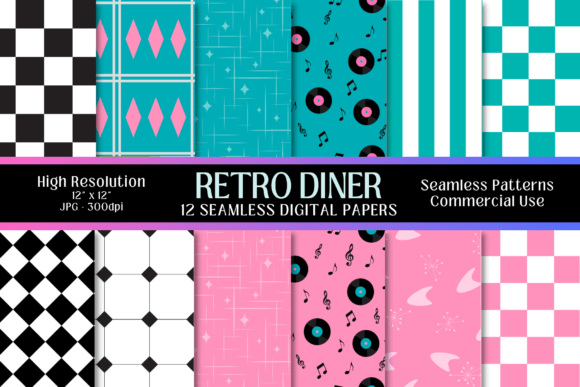
Retro Diner Digital Paper taps directly into this cultural zeitgeist. By utilizing the iconic bubble gum pink and teal color palette synonymous with the 1950s, these designs do not simply replicate the past; they reinterpret it for contemporary use. The inclusion of checkerboard patterns, vinyl record motifs, and classic diner typography creates a visual language that is instantly recognizable yet versatile enough for modern applications. This relevance is driven by a broader consumer preference for experiences that feel tactile and human, even when delivered through screens.
Bridging Creativity and Efficiency: What You Will Receive
For freelancers and agency teams, time is the most critical resource. The value of a digital asset lies not only in its aesthetic appeal but also in its technical usability. Retro Diner Digital Paper is engineered to integrate seamlessly into professional workflows, offering high-fidelity assets that require minimal post-processing.
The package includes 12 distinct seamless patterns, each meticulously crafted to ensure continuity when tiled or expanded. These are provided as individual files in .JPG format, ensuring compatibility with a wide range of software ecosystems. Each pattern is rendered at a substantial resolution of 3600 x 3600 pixels at 300 dpi in RGB color space. This high resolution allows designers to scale these assets for both digital displays and large-format print materials without sacrificing clarity or introducing pixelation.
- High-Resolution Assets: At 300 dpi, these files meet the rigorous standards required for professional printing, from business cards to billboard advertisements.
- Organized Delivery: In addition to individual files, users receive one comprehensive PNG containing all 12 images along with associated file numbers. This organizational feature significantly reduces the friction of asset management, allowing creatives to quickly identify and select the correct pattern for specific project needs.
- Vector Origins: All patterns were created using Adobe Illustrator and Photoshop, ensuring that the underlying geometry is precise and the color gradients are smooth.
This structure supports a variety of professional roles. Marketers can quickly generate social media backgrounds that stand out in crowded feeds. Entrepreneurs can create cohesive branding kits for pop-up shops or product launches. Freelancers can offer premium design packages that include these unique, vintage-inspired textures, thereby increasing their perceived value.
Color Theory and the Psychology of Nostalgia
The specific color choices in Retro Diner Digital Paper are not arbitrary; they are rooted in the psychology of color and mid-century marketing trends. The combination of bubble gum pink and teal evokes feelings of playfulness, optimism, and energy. These colors were historically used to attract attention in storefronts and advertising, signaling a break from the austerity of the post-war era.
Furthermore, the availability of a red, black, and white version of similar patterns offers a stark contrast to the pastel-heavy primary set. This monochromatic option appeals to a different segment of the market—one that seeks the structural integrity and boldness of mid-century graphic design without the softness of the traditional diner palette. This duality allows brands to tailor their visual identity precisely. A bakery might choose the pink and teal to suggest sweetness and fun, while a music venue or a vintage clothing store might opt for the red, black, and white to convey edge and sophistication.
Technical Considerations for Cross-Media Applications
While the digital utility of these assets is robust, professionals must remain cognizant of the technical nuances involved in transferring digital designs to physical products. The files are provided in RGB (Red, Green, Blue) color mode, which is the standard for screen-based media such as websites, mobile apps, and social media graphics. However, the physical world operates on CMYK (Cyan, Magenta, Yellow, Key/Black) color models.
This distinction is crucial for entrepreneurs and marketers who intend to print merchandise, packaging, or promotional materials. Because printers utilize CMYK, colors can appear slightly duller or shifted when converted from RGB. To mitigate this risk, it is highly recommended to print a small sample before committing to a large production run. This practice ensures that the vibrancy of the bubble gum pink and the depth of the teal translate accurately to the final physical product. By acknowledging this limitation and planning accordingly, professionals can maintain brand integrity across all touchpoints.
Strategic Applications in Modern Business
The application of Retro Diner Digital Paper extends far beyond simple decoration. It serves as a narrative device that can enhance various aspects of business communication.
Brand Identity and Packaging: For food and beverage companies, especially those specializing in artisanal sweets, burgers, or coffee, these patterns provide an immediate visual cue regarding flavor profiles and brand personality. Packaging adorned with these seamless patterns can sit on a shelf and communicate a story of quality and tradition without a single word of copy.
Digital Marketing and Content Creation: In the realm of digital marketing, visual consistency is key. Creators can use these patterns as background layers for email newsletters, blog headers, or Instagram stories. The seamless nature of the JPG files means they can be extended infinitely, providing a consistent backdrop for text overlays and call-to-action buttons. This saves hours of manual editing and ensures a polished, professional look across all platforms.
Event Design and Experiential Marketing: Pop-up events and trade shows rely heavily on immersive environments. Using these digital papers for printed backdrops, banners, and table runners can transform a generic booth into a themed experience. The ability to download individual files allows event planners to mix and match patterns, creating dynamic visual interest that encourages attendee engagement and photo-sharing on social media.
Meeting Evolving Creative Needs
The modern creator economy demands versatility. Professionals are no longer siloed into single disciplines; a marketer may also be a graphic designer, and a freelancer may handle web development and print production. Tools that bridge these gaps are invaluable. Retro Diner Digital Paper addresses this need by providing assets that are ready for both digital and print use, reducing the learning curve associated with file conversion and resolution adjustment.
Moreover, the emphasis on "vintage cool" reflects a growing desire among consumers to connect with history. In a world where AI-generated content is becoming commonplace, human-centric, hand-crafted-looking designs stand out. Even though these are digital assets, their inspiration is rooted in analog craftsmanship. This perceived authenticity helps build trust with audiences who are skeptical of overly polished, synthetic corporate imagery.
Conclusion: Leveraging Heritage for Future Growth
The adoption of Retro Diner Digital Paper is more than a stylistic choice; it is a strategic decision that aligns with current trends in nostalgia-driven marketing and efficient design workflows. By providing high-quality, easily accessible, and culturally resonant assets, these patterns empower professionals to tell compelling stories that resonate with modern audiences.
Whether you are launching a new brand, refreshing your digital presence, or creating immersive physical experiences, these 12 seamless patterns offer a reliable foundation for success. They allow you to harness the power of the past to enhance your future projects. As the market continues to evolve, the ability to blend historical aesthetics with contemporary technology will remain a key differentiator. Embrace the retro vibe, optimize your workflow, and let the good times roll in your next creative endeavor.