Seamless Ocean Sea Undersea Papers: A Practical Guide to Digital Texture Resources
In the realm of digital design, texture is often the differentiator between a flat, generic layout and a professional, immersive visual experience. For designers, scrapbookers, textile artists, and interior decorators, finding high-quality, versatile textures is a constant pursuit. Among the various categories of digital assets, Seamless Ocean Sea Undersea Papers have emerged as a specialized resource that bridges the gap between natural inspiration and technical utility. This specific collection offers more than just aesthetic appeal; it provides a functional toolkit for creators who require precision, scalability, and consistency in their work.
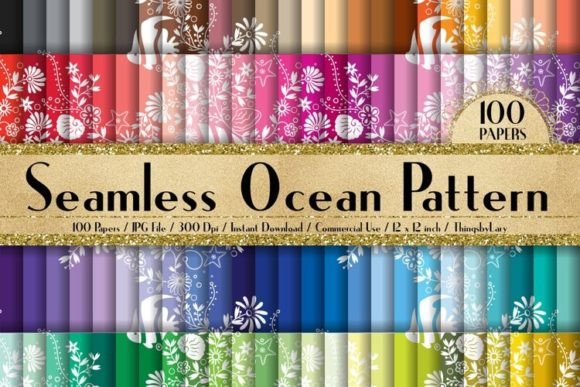
The core value proposition of this pack lies in its sheer volume and technical specifications. It contains 100 distinct JPG images, each representing a unique variation of oceanic themes. However, quantity alone does not guarantee quality or usability. The true distinction of these Seamless Ocean Sea Undersea Papers is found in their construction: they are designed with seamless tiling capabilities, created at a standard 12 x 12 inches (30.48 cm) size, and rendered at a high-resolution 300 dpi. These parameters are not arbitrary; they are industry standards that dictate how the asset can be used across different mediums, from web backgrounds to large-format fabric printing.
Understanding the Technical Specifications
Before evaluating the creative potential of these papers, it is essential to understand the technical foundation that supports them. The decision to use digital papers often hinges on resolution and format compatibility. Here is a breakdown of why the specifications of this pack matter:
- Resolution (300 dpi): Dots per inch is the critical metric for print quality. A resolution of 300 dpi ensures that when these patterns are printed, they remain sharp and free from pixelation. This is particularly important for physical applications such as greeting cards, book covers, or fabric swatches. Lower resolution assets (typically 72 dpi) are sufficient for screen-only use but fail when scaled up for print.
- Dimensions (12 x 12 inches): This square format is a legacy standard in the scrapbooking and crafting community, but it remains highly relevant in graphic design. It provides a manageable file size while offering enough surface area to display complex wave, bubble, or underwater textures without becoming repetitive too quickly.
- Format (JPG): While PNG is often preferred for transparency, JPG is the universal standard for photographic textures and solid color patterns. Its widespread compatibility means these files can be opened in almost any design software, from Adobe Photoshop and Illustrator to Canva and Microsoft PowerPoint, without requiring conversion.
By adhering to these standards, the Seamless Ocean Sea Undersea Papers eliminate the need for post-purchase adjustments. Designers do not need to stretch low-res images or convert file types, saving valuable time in the production workflow.
The Power of Seamless Tiling
The term "seamless" carries significant weight in digital asset design. A seamless pattern is one where the edges align perfectly, allowing the image to repeat indefinitely without visible breaks or mismatched borders. This feature transforms a small 12 x 12 inch image into an infinite canvas.
For users working on large-scale projects, this capability is indispensable. Consider a web designer creating a full-width hero background. Using a non-seamless image would result in awkward gaps or stretched distortions. With Seamless Ocean Sea Undersea Papers, the designer can tile the image horizontally and vertically to cover any screen size. Similarly, for fashion designers looking to create all-over prints for swimwear or summer dresses, the ability to scale the pattern seamlessly ensures that the fabric looks cohesive and professionally produced.
This flexibility allows for creative experimentation. Users can adjust the opacity, blend modes, or color overlays in their editing software to create entirely new variations from the same base asset. One underlying blue wave pattern might serve as a subtle texture for a corporate website, while the same pattern, inverted and brightened, could become a vibrant backdrop for a children’s party invitation.
Comparing Digital Papers to Other Texture Sources
When sourcing textures, creators typically choose between three main avenues: custom photography, vector illustrations, and pre-made digital paper packs like Seamless Ocean Sea Undersea Papers. Each option presents distinct tradeoffs regarding cost, time, and customization.
Custom Photography vs. Digital Packs: Photographing your own ocean scenes offers ultimate uniqueness. However, achieving a truly seamless loop requires advanced photo manipulation skills and software proficiency. Furthermore, lighting inconsistencies and natural debris can make clean tiling difficult. Digital packs offer a curated, clean aesthetic that is ready to use immediately. While they lack the personal touch of original photography, they provide consistency across a project that is hard to achieve with random snapshots.
Vector Illustrations vs. Raster Images: Vector graphics are infinitely scalable without loss of quality. However, vectors often look stylized or cartoonish, which may not fit the desired mood of a realistic or sophisticated design. The Seamless Ocean Sea Undersea Papers utilize raster formats (JPG), which allow for photorealistic gradients, light refractions, and organic textures that mimic real water and sea life. If the goal is realism or depth, raster-based digital papers are often superior to flat vector shapes.
Stock Image Libraries vs. Themed Packs: Searching through general stock libraries can be time-consuming. You might find a single perfect image, but locating 50 consistent variations is rare. A themed pack like this one provides variety within a unified style. The 100 different colors ensure that you can match specific brand palettes or seasonal trends without compromising the thematic integrity of the ocean motif.
Ideal Use Cases and Applications
Given the versatility of these papers, several professional and hobbyist fields stand to benefit significantly. Understanding these applications helps in determining if this resource fits your specific needs.
- Textile and Fashion Design: As mentioned, the seamless nature makes these ideal for fabric printing. Whether for digital printing on demand or traditional screen printing, having a high-res, tiled pattern reduces setup errors. The 300 dpi resolution ensures that fine details in the wave patterns translate well to fabric fibers.
- Packaging Design: Eco-friendly brands often use ocean-themed imagery to convey sustainability and purity. These papers can be used to wrap products, design labels, or create insert cards. The variety of colors allows for differentiation between product lines while maintaining a cohesive brand identity.
- Digital Marketing and Web Design: Backgrounds for landing pages, email newsletters, and social media banners require lightweight yet high-impact visuals. Since these are JPGs, they load quickly compared to heavy video backgrounds, yet they offer more visual interest than solid colors. The ability to tile them ensures they fit any device screen size.
- Scrapbooking and Stationery: For physical crafters, the 12 x 12 inch size is native to most cutting mats and cardstock sizes. These papers can be printed at home or via professional services to create journals, albums, and wedding invitations.
Evaluating Limitations and Decision Factors
No resource is a perfect fit for every scenario. When considering Seamless Ocean Sea Undersea Papers, it is important to acknowledge potential limitations. Because the files are JPGs, they do not support transparency. If you need to place the pattern over another image with irregular shapes, you will need to use masking techniques in your design software, whereas a PNG file might offer easier layering. Additionally, the static nature of the images means they cannot replace dynamic elements like animated water effects in video production.
Furthermore, the reliance on a pre-set color palette means that if you require a very specific shade of teal or navy that is not included in the 100 options, you will need to edit the hue/saturation manually. While this is a minor task for experienced users, it adds a step for beginners.
Despite these minor constraints, the value proposition remains strong. The combination of volume (100 images), quality (300 dpi), and utility (seamless tiling) addresses the majority of common design needs. For professionals, the time saved in searching for and preparing assets often outweighs the initial cost of the pack.
Conclusion
The choice to incorporate Seamless Ocean Sea Undersea Papers into your workflow depends on your balance between creative control and efficiency. If you prioritize speed, consistency, and high-quality print readiness, this pack offers a robust solution. It serves as a reliable foundation for projects ranging from digital marketing materials to physical textiles. By understanding the technical strengths of seamless tiling and high-resolution raster images, designers can leverage these resources to enhance their visual storytelling without getting bogged down in technical hurdles. For those exploring alternatives, comparing these features against custom photography or vector art will help clarify whether this specific type of digital asset aligns with the aesthetic and practical demands of your current project.